
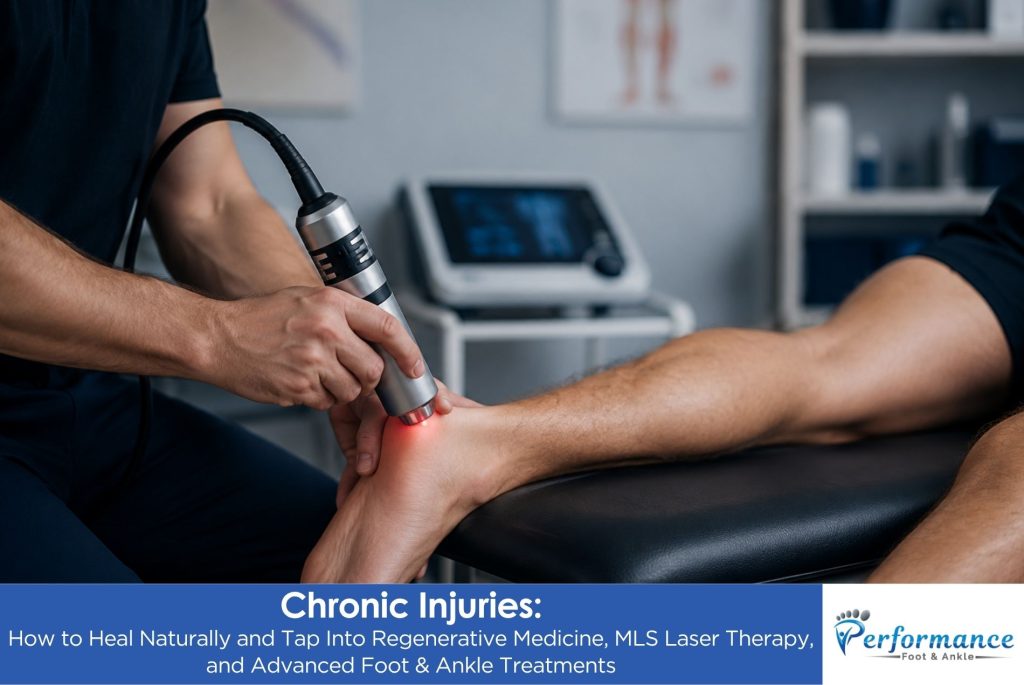
 Why Chronic Injuries Don’t Always Heal on Their Own
Many people assume that if an injury hasn’t healed after a few weeks, they simply need more rest. Unfortunately, chronic injuries don’t always respond that way. Whether it’s persistent heel pain, Achilles tendonitis, plantar fasciitis, arthritis, tendon injuries, or lingering ankle pain, chronic conditions often develop because the body’s natural healing process has slowed or become ineffective.
At Performance Foot & Ankle, patients have access to advanced regenerative medicine technologies and evidence-based treatments designed to stimulate healing, reduce inflammation, relieve pain, and restore mobility. Modern therapies—including advanced laser therapy and regenerative treatment options—can often help patients recover without surgery while improving their quality of life.
Understanding why chronic injuries occur and how regenerative medicine works can help patients make informed decisions about their treatment.
What Is a Chronic Injury?
A chronic injury is generally defined as an injury or condition that persists for more than three months or repeatedly returns despite conservative care.
Unlike acute injuries that occur suddenly, chronic injuries usually develop over time from repetitive stress, degeneration, poor biomechanics, inadequate healing, or age-related tissue changes.
Common chronic foot and ankle conditions include:
- Plantar fasciitis
- Achilles tendonitis
- Posterior tibial tendon dysfunction
- Peroneal tendon injuries
- Chronic ankle instability
- Arthritis
- Stress fractures with delayed healing
- Heel pain
- Chronic ligament injuries
- Neuromas
- Tendon degeneration (tendinosis)
Without proper treatment, these conditions can progressively worsen and significantly impact daily activities.
Why Do Chronic Injuries Stop Healing?
Inflammation Becomes Dysregulated
Inflammation is a necessary part of healing. However, when inflammation persists for months, it can actually interfere with tissue repair instead of supporting it.
Chronic inflammation may lead to:
- Ongoing pain
- Scar tissue formation
- Reduced circulation
- Tissue degeneration
- Limited mobility
- Delayed healing
Managing inflammation appropriately—not simply eliminating it—is often essential for recovery.
Poor Blood Supply Slows Tissue Repair
Certain foot and ankle structures naturally receive limited blood flow.
Examples include:
- Plantar fascia
- Achilles tendon
- Cartilage
- Ligaments
Reduced circulation means fewer oxygen-rich nutrients and healing cells reach the injured tissue, making recovery significantly slower.
Degenerative Changes Replace Healthy Tissue
Over time, damaged tissue can become weaker rather than stronger.
Instead of healthy collagen fibers forming, the body may produce:
- Disorganized scar tissue
- Degenerated tendon fibers
- Calcifications
- Chronic thickening
These changes reduce strength, flexibility, and normal function.
What Is Regenerative Medicine?
Regenerative medicine focuses on helping the body repair damaged tissues by stimulating its own natural healing processes.
Rather than only masking symptoms with medication, regenerative therapies encourage:
- Cellular repair
- Improved circulation
- Reduced inflammation
- Increased collagen production
- Healthier tissue remodeling
- Faster recovery
Many regenerative treatments are minimally invasive and can often delay—or even eliminate—the need for surgery in appropriately selected patients.
Advanced Laser Therapy for Chronic Foot and Ankle Injuries
One of the most exciting developments in regenerative medicine is MLS (Multiwave Locked System) Laser Therapy and other advanced therapeutic laser technologies.
Unlike surgical lasers, therapeutic lasers do not cut tissue.
Instead, they use specific wavelengths of light energy that penetrate deeply into injured tissues.
This process is called photobiomodulation.
How Laser Therapy Works
Therapeutic laser energy stimulates cells by increasing mitochondrial activity.
The mitochondria are often referred to as the “powerhouse” of the cell because they produce ATP (adenosine triphosphate), the energy required for healing.
Laser therapy helps increase:
- Cellular metabolism
- ATP production
- Oxygen utilization
- Blood circulation
- Lymphatic drainage
- Collagen synthesis
These biological changes support tissue repair while reducing pain and inflammation.
Conditions That Often Respond Well to Laser Therapy
Laser therapy has shown promising clinical outcomes for many chronic conditions, including:
Plantar Fasciitis
Laser therapy may reduce chronic inflammation while promoting healing of the plantar fascia.
Achilles Tendonitis
Degenerative Achilles tendons often respond well to treatments that stimulate collagen remodeling and improve circulation.
Arthritis
Laser therapy may help decrease inflammation surrounding arthritic joints while improving comfort and mobility.
Tendon Injuries
Whether involving the posterior tibial tendon, peroneal tendons, or flexor tendons, laser therapy may encourage tissue regeneration.
Chronic Ankle Pain
Old sprains frequently leave residual inflammation and ligament weakness.
Laser therapy may support healing while reducing pain.
Neuropathic Pain
Some patients with nerve irritation experience improved comfort following laser treatments as inflammation decreases.
The Science Behind Photobiomodulation
Numerous clinical studies have demonstrated that photobiomodulation may influence several biological pathways involved in healing.
Research has shown laser therapy may help:
- Increase fibroblast activity
- Improve collagen organization
- Enhance microcirculation
- Reduce inflammatory mediators
- Accelerate wound healing
- Improve tissue oxygenation
- Reduce oxidative stress
- Support nerve regeneration
These mechanisms make therapeutic laser treatment an increasingly valuable component of evidence-based musculoskeletal care.
Regenerative Medicine Goes Beyond Lasers
Comprehensive regenerative treatment plans often combine several therapies to maximize healing.
Depending on your condition, your podiatrist may recommend:
Custom Orthotics
Reducing abnormal mechanical stress allows injured tissues to heal more efficiently.
Physical Rehabilitation
Strengthening weak muscles and improving flexibility helps prevent reinjury.
Activity Modification
Temporary changes in activity levels can reduce repetitive stress while healing occurs.
Anti-Inflammatory Strategies
Lifestyle modifications, nutrition, weight management, and appropriate footwear all contribute to better healing outcomes.
Advanced Diagnostic Imaging
Ultrasound and digital imaging help identify the exact source of pain and guide treatment decisions.
Benefits of Regenerative Medicine for Foot and Ankle Injuries
Many patients appreciate regenerative medicine because it focuses on healing instead of simply masking pain.
Potential benefits include:
- Non-surgical treatment
- Drug-free pain management
- Faster recovery
- Reduced inflammation
- Improved circulation
- Enhanced tissue healing
- Better mobility
- Increased activity levels
- Reduced downtime
- Long-term symptom improvement
While individual results vary, many patients experience meaningful improvements with properly selected regenerative therapies.
Who Is a Good Candidate?
Regenerative medicine may be appropriate for individuals who have:
- Chronic heel pain
- Persistent tendonitis
- Arthritis
- Failed conservative treatment
- Chronic ankle instability
- Overuse injuries
- Sports injuries
- Recurrent inflammation
- Difficulty walking due to pain
A comprehensive examination helps determine which treatment options are most appropriate for each patient.
Why Early Treatment Matters
Many people live with chronic foot pain for years before seeking treatment.
Unfortunately, untreated injuries often become more difficult to heal as degeneration progresses.
Early intervention may:
- Prevent worsening damage
- Reduce chronic inflammation
- Improve long-term outcomes
- Preserve mobility
- Avoid compensatory injuries affecting the knees, hips, and back
Seeking evaluation sooner rather than later often leads to better recovery.
Why Choose Performance Foot & Ankle?
At Performance Foot & Ankle, patients receive individualized treatment plans built around evidence-based medicine, advanced technology, and compassionate care. Rather than relying on a one-size-fits-all approach, the team carefully evaluates the underlying cause of chronic pain and develops a personalized strategy that may include regenerative medicine, advanced laser therapy, custom orthotics, rehabilitation recommendations, and other conservative treatments before considering surgery.
Whether you’re an athlete looking to return to competition, someone struggling with arthritis, or simply hoping to walk comfortably again, the goal is to help restore function, reduce pain, and improve your overall quality of life using the most advanced treatment options available.
Frequently Asked Questions
Can chronic injuries actually heal?
Yes. Although chronic injuries typically heal more slowly than acute injuries, many can improve significantly with appropriate treatment that stimulates tissue repair and addresses the underlying cause.
Does laser therapy hurt?
No. Most patients experience little to no discomfort during treatment. Many describe a gentle warming sensation or no sensation at all.
How many laser treatments are usually needed?
Treatment plans vary depending on the condition, severity, and duration of symptoms. Many patients begin noticing improvement after several sessions, though chronic conditions often require a series of treatments.
Is laser therapy safe?
Yes. Therapeutic laser technology is considered safe when performed by trained medical professionals using FDA-cleared devices and appropriate treatment protocols.
Can laser therapy help arthritis?
Laser therapy may reduce inflammation, improve circulation, and help relieve pain associated with certain forms of arthritis, allowing patients to move more comfortably.
Is regenerative medicine only for athletes?
No. Patients of all ages and activity levels may benefit from regenerative therapies, including individuals with arthritis, chronic tendon injuries, and long-standing foot pain.
Will regenerative medicine eliminate the need for surgery?
Not always. While many patients experience significant improvement with conservative regenerative treatments, some conditions may still require surgical intervention depending on the severity of tissue damage.
Are regenerative treatments covered by insurance?
Coverage varies depending on the specific treatment and individual insurance plan. The team at Performance Foot & Ankle can help discuss available options during your consultation.
Can regenerative medicine be combined with other treatments?
Absolutely. Regenerative therapies often work best when combined with custom orthotics, stretching, strengthening exercises, physical therapy, and lifestyle modifications.
When should I schedule an evaluation?
If your foot or ankle pain has persisted for several weeks, continues to return, or interferes with daily activities, it’s time to schedule a comprehensive evaluation to determine the underlying cause and explore advanced treatment options.
Contact Performance Foot & Ankle
Performance Foot & Ankle
3095 Old Conejo Road, Suite 100
Thousand Oaks, CA 91320
Phone: (805) 273-1415
Website: performancefa.com
Request An Appointment: performancefa.com/appointments/