
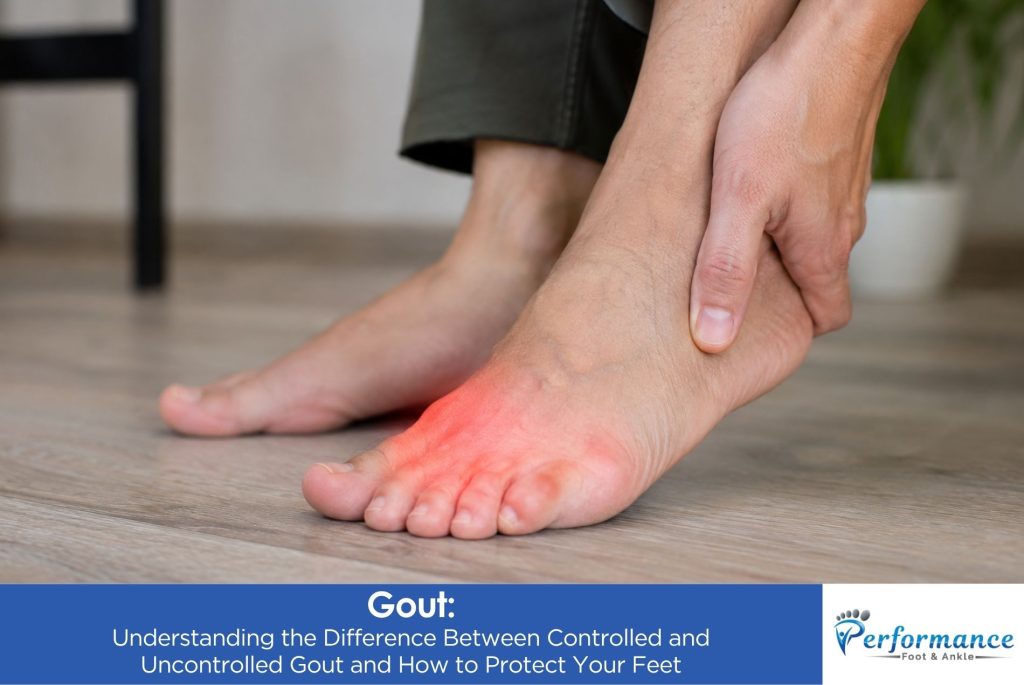
Why Proper Gout Management Matters
Gout is one of the most painful forms of inflammatory arthritis, often affecting the feet and ankles with sudden, intense attacks that can make even standing or walking unbearable. While many people believe gout is simply an occasional flare-up caused by eating certain foods, the reality is much more complex. Gout is a chronic metabolic condition that, when left untreated or poorly managed, can lead to permanent joint damage, chronic pain, deformities, and decreased mobility.
The good news is that gout is highly treatable. With proper medical care, lifestyle modifications, and long-term management, many patients can achieve excellent control of their symptoms and significantly reduce the risk of future complications.
At Performance Foot & Ankle, we help patients throughout Thousand Oaks and surrounding communities diagnose, manage, and treat gout before it causes lasting damage. Understanding the difference between controlled and uncontrolled gout is the first step toward protecting your foot health.
What Is Gout?
Gout is a type of inflammatory arthritis caused by elevated levels of uric acid in the bloodstream, a condition known as hyperuricemia. When uric acid levels become too high, microscopic needle-like crystals form within joints and surrounding tissues.
The body’s immune system recognizes these crystals as foreign, triggering a powerful inflammatory response that causes:
- Sudden severe pain
- Swelling
- Redness
- Warmth
- Tenderness
- Difficulty walking
Although gout can affect many joints, it most commonly develops in the big toe joint (first metatarsophalangeal joint). It may also affect the:
- Midfoot
- Heel
- Ankle
- Toes
- Knees
- Wrists
- Elbows
Many patients wake up in the middle of the night with excruciating pain during their first gout attack.
Why Does Gout Develop?
Several factors contribute to elevated uric acid levels.
Common causes include:
- Genetics
- Kidney disease
- Obesity
- High blood pressure
- Diabetes
- Metabolic syndrome
- Certain medications (especially diuretics)
- High-purine diets
- Alcohol consumption
- Dehydration
Purines are naturally occurring substances found in many foods. As the body breaks them down, uric acid is produced.
Foods high in purines include:
- Red meat
- Organ meats
- Shellfish
- Sardines
- Anchovies
- Certain seafood
- Beer
- Sugary beverages containing fructose
While diet plays a role, genetics and kidney function often have a greater influence on gout development than food choices alone.
Controlled vs. Uncontrolled Gout
What Is Controlled Gout?
Controlled gout means uric acid levels remain consistently low enough to prevent crystal formation.
Patients with controlled gout typically experience:
- Few or no flare-ups
- Minimal joint inflammation
- Stable uric acid levels
- No progressive joint destruction
- Improved mobility
- Better quality of life
Long-term treatment focuses on preventing future attacks rather than simply treating pain when symptoms occur.
Many patients with controlled gout take medications such as:
- Allopurinol
- Febuxostat
- Probenecid (in selected patients)
These medications lower uric acid levels over time, preventing additional crystal deposits from forming.
What Is Uncontrolled Gout?
Uncontrolled gout occurs when uric acid remains elevated for extended periods.
Patients often experience:
- Frequent flare-ups
- Longer-lasting attacks
- Severe inflammation
- Chronic joint pain
- Increasing stiffness
- Permanent joint damage
Over time, uncontrolled gout becomes much more than occasional arthritis.
It becomes a chronic destructive disease.
The Stages of Uncontrolled Gout
Without treatment, gout typically progresses through several stages.
Stage 1: Asymptomatic Hyperuricemia
Uric acid levels are elevated, but symptoms have not yet appeared.
Although patients feel fine, crystals may already be forming.
Stage 2: Acute Gout Attacks
Sudden painful episodes begin.
These attacks often:
- Occur overnight
- Peak within 24 hours
- Last several days
- Resolve completely between attacks
Many people mistakenly believe the problem has disappeared after the pain resolves.
Stage 3: Intercritical Gout
This is the symptom-free period between attacks.
Even though pain is absent, uric acid crystals continue accumulating.
Joint damage quietly progresses.
Stage 4: Chronic Tophaceous Gout
This advanced stage develops after years of uncontrolled disease.
Large deposits of uric acid crystals called tophi develop beneath the skin.
Tophi commonly appear on:
- Toes
- Feet
- Ankles
- Fingers
- Elbows
- Achilles tendon
Tophi can cause:
- Permanent deformity
- Bone erosion
- Skin ulceration
- Infection
- Loss of joint function
Signs Your Gout May Not Be Well Controlled
Patients should seek evaluation if they experience:
- More than one or two attacks per year
- Increasing pain severity
- Swelling between attacks
- Visible lumps around joints
- Persistent stiffness
- Difficulty wearing shoes
- Reduced range of motion
- Chronic foot discomfort
These symptoms often indicate ongoing crystal accumulation.
Why Foot Specialists Play an Important Role
Although gout is a systemic disease, many of its most disabling symptoms occur in the feet.
Podiatrists evaluate:
- Joint damage
- Foot deformities
- Walking mechanics
- Pressure points
- Skin breakdown
- Chronic inflammation
Early intervention helps preserve mobility and reduce long-term complications.
Diagnosing Gout
Proper diagnosis begins with a comprehensive evaluation.
Your provider may recommend:
Medical History
Your physician will discuss:
- Previous flare-ups
- Family history
- Diet
- Medical conditions
- Medications
Physical Examination
The affected joints are evaluated for:
- Swelling
- Redness
- Warmth
- Tenderness
- Deformity
- Range of motion
Blood Testing
Blood tests measure uric acid levels.
However, it’s important to know that uric acid may appear normal during an acute attack, so additional testing may still be needed.
Joint Fluid Analysis
This remains the gold standard for diagnosis.
Joint fluid is examined under a microscope for uric acid crystals.
Imaging Studies
Modern imaging may include:
- Digital X-rays
- Diagnostic ultrasound
- Dual-energy CT (DECT) in selected cases
These studies help evaluate joint damage and crystal deposits.
Treatment Options for Controlled Gout
Managing an Acute Gout Flare
Treatment during an attack focuses on reducing inflammation and relieving pain.
Depending on your medical history, treatment may include:
- Anti-inflammatory medications (NSAIDs)
- Colchicine
- Corticosteroids
- Rest
- Ice therapy
- Elevation
- Protective footwear
Early treatment often shortens the duration of an attack.
Long-Term Uric Acid Control
Long-term management focuses on lowering uric acid below target levels.
Treatment may include:
- Prescription uric acid-lowering medications
- Routine blood monitoring
- Medication adjustments
- Lifestyle counseling
Consistency is essential.
Stopping medications once symptoms improve often allows uric acid to rise again.
Lifestyle Changes That Support Gout Control
Healthy lifestyle habits complement medical treatment.
Helpful strategies include:
- Staying well hydrated
- Maintaining a healthy weight
- Limiting alcohol intake
- Reducing sugary beverages
- Eating a balanced diet
- Exercising regularly
- Managing diabetes and blood pressure
- Following medication instructions carefully
What Happens If Gout Is Left Untreated?
Untreated gout can lead to serious complications.
These include:
- Permanent arthritis
- Joint destruction
- Chronic pain
- Foot deformities
- Tendon damage
- Kidney stones
- Reduced mobility
- Difficulty working
- Impaired balance
- Lower quality of life
Fortunately, these complications are often preventable with early intervention.
When Should You See a Foot and Ankle Specialist?
Schedule an evaluation if you experience:
- Sudden severe pain in the big toe
- Recurrent episodes of foot swelling
- Persistent joint stiffness
- Difficulty walking
- Foot pain that repeatedly returns
- Swollen joints without injury
- Visible bumps around joints
- Chronic redness or warmth
Prompt treatment helps reduce inflammation while preventing irreversible damage.
Frequently Asked Questions About Gout
Is gout curable?
While gout is generally considered a chronic condition, it is highly manageable. With proper treatment and ongoing uric acid control, many patients experience few or no future flare-ups.
Does eating too much meat cause gout?
Diet can contribute to gout, but genetics, kidney function, and overall metabolism often play a larger role than food choices alone.
Why does gout usually affect the big toe?
The big toe is cooler than the rest of the body, making it an ideal environment for uric acid crystals to form.
Can women get gout?
Yes. Although gout is more common in men, women—especially after menopause—can also develop gout.
Can gout damage my feet permanently?
Yes. Repeated uncontrolled attacks may lead to permanent joint destruction, deformity, and loss of mobility.
Is walking during a gout attack recommended?
Most patients benefit from limiting weight-bearing activities during severe flare-ups until inflammation improves.
Can gout return after years without symptoms?
Yes. Even long symptom-free periods do not necessarily mean uric acid levels are controlled.
Can gout be mistaken for other foot conditions?
Yes. Gout can resemble infections, fractures, bunions, cellulitis, pseudogout, or other inflammatory arthritis conditions, making an accurate diagnosis essential.
How can I reduce my risk of future attacks?
Take prescribed medications consistently, maintain a healthy weight, stay hydrated, limit alcohol and sugary drinks, and attend regular follow-up appointments.
When should I seek immediate medical attention?
Seek prompt evaluation if you have severe joint pain with fever, rapidly spreading redness, drainage, inability to bear weight, or symptoms that may indicate an infection rather than gout.
Take Control of Gout Before It Controls You
Whether you’ve experienced your first gout attack or have struggled with repeated flare-ups for years, early treatment can make a tremendous difference. Controlled gout allows patients to stay active, protect their joints, and avoid many of the painful complications associated with chronic disease.
At Performance Foot & Ankle, our experienced foot and ankle specialists provide comprehensive evaluations, personalized treatment plans, and ongoing care to help patients manage gout effectively and preserve long-term foot health. If you’re experiencing recurring foot pain, swelling, or symptoms of gout, don’t wait for the condition to worsen. Early diagnosis and expert care can help you regain comfort, mobility, and confidence.
Performance Foot & Ankle
Performance Foot & Ankle
3095 Old Conejo Road, Suite 100
Thousand Oaks, CA 91320
Phone: (805) 273-1415
Website: performancefa.com
Request An Appointment: performancefa.com/appointments/